
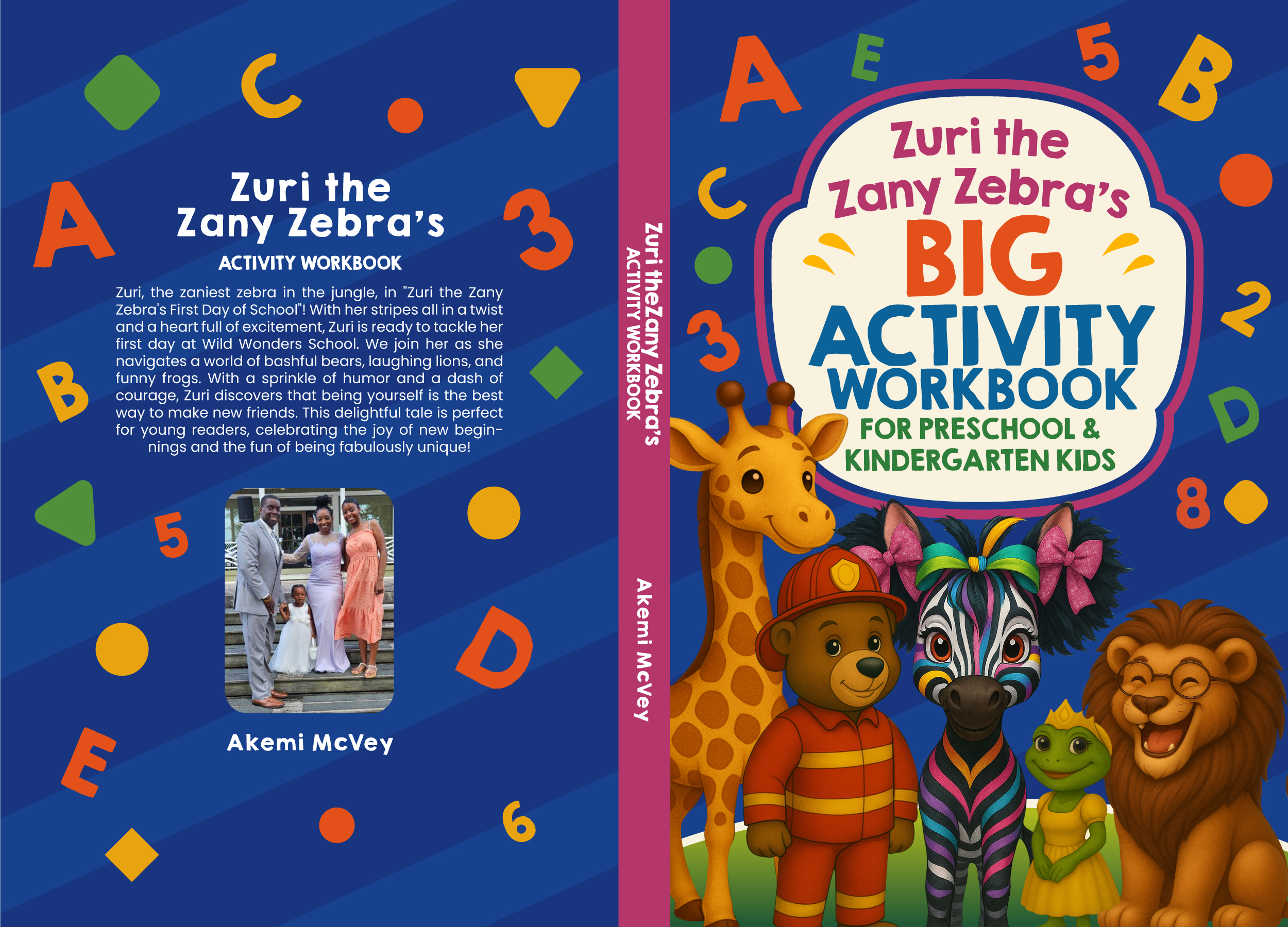
As parents, we often think of storytime as a special bonding moment, a chance to cuddle up with our little ones, turn pages together, and share a few laughs before bedtime. While those moments are certainly priceless, storytime offers something even more valuable: learning opportunities that help shape a child’s development.
Books like Zuri the Zany Zebra’s First Day of School do much more than entertain. They introduce children to new ideas, emotions, experiences, and skills that will benefit them both in and out of the classroom. Through colorful characters, engaging illustrations, and relatable situations, storytime becomes a powerful tool for early childhood development.
Here are seven essential skills preschoolers can learn through storytime.
1. Language and Vocabulary Development
One of the most obvious benefits of reading with young children is vocabulary growth. Every story introduces new words, phrases, and ways of communicating.
In Zuri the Zany Zebra’s First Day of School, children are exposed to descriptive language, playful rhymes, and character dialogue that naturally expand their vocabulary. Words associated with school, friendship, emotions, animals, and daily routines become familiar through repetition and context.
The more children hear language used in meaningful ways, the easier it becomes for them to express their own thoughts and feelings.
2. Listening and Attention Skills
Preschoolers are still learning how to focus and pay attention for longer periods of time. Storytime helps strengthen these skills in a fun and engaging way.
As children follow Zuri’s adventure through her first day at Wild Wonders School, they learn to listen carefully, follow a sequence of events, and stay engaged with the story. Interactive elements, such as counting Zuri’s stripes or searching for the hidden chameleon, encourage active participation and help keep young minds focused.
These listening skills become especially important when children enter classroom environments where following instructions and paying attention are essential.
3. Emotional Awareness
Young children experience a wide range of emotions, but they don’t always have the words to describe them.
Stories provide a safe way for children to recognize and understand feelings. Throughout her school adventure, Zuri experiences excitement, curiosity, nervousness, happiness, and pride. As children watch her navigate these emotions, they begin to recognize similar feelings in themselves.
This emotional awareness helps children develop confidence and gives them tools to communicate their feelings more effectively.
4. Social Skills and Friendship
Making friends is one of the biggest milestones in early childhood.
Through storytime, children learn how positive relationships are built. Zuri meets Benny the Bear, Leo the Lion, and Finny the Frog during her first day at school. They play together, share experiences, and learn from one another.
These interactions help children understand important social concepts such as kindness, cooperation, sharing, and respect. Seeing positive friendships modeled in books can help preschoolers feel more prepared when interacting with their own peers.
5. Problem-Solving and Critical Thinking
Many parents don’t realize that storytime can strengthen problem-solving skills.
As children follow a story, they naturally begin asking questions:
- What will happen next?
- How will the character solve a problem?
- Why did the character make that choice?
Interactive stories like Zuri’s encourage children to think, observe, and make connections. Looking for hidden objects, identifying emotions, and discussing character decisions all help develop critical thinking abilities that support future learning.
6. Imagination and Creativity
Few things are more important during early childhood than imagination.
Storybooks allow children to explore places, characters, and adventures beyond their everyday experiences. Zuri’s colorful stripes, jungle classroom, and animal friends inspire children to imagine their own creative worlds.
Creative thinking developed through stories often extends into pretend play, drawing, storytelling, and problem-solving activities. These experiences help children become more flexible thinkers and confident creators.
7. School Readiness and Confidence
For many preschoolers, starting school can feel like a big step.
Books about school help children become familiar with classroom routines before they experience them in real life. Through Zuri’s first day, children learn about meeting teachers, making friends, participating in activities, sharing snacks, and enjoying recess.
Seeing Zuri successfully navigate these experiences helps reduce uncertainty and builds excitement about school. Children begin to understand that new experiences can be fun, rewarding, and filled with opportunities to learn.
Final Thoughts
Storytime is much more than entertainment. Every page turned creates opportunities for growth, learning, and connection.
Books like Zuri the Zany Zebra’s First Day of School help preschoolers build language skills, strengthen attention, understand emotions, develop friendships, solve problems, use their imagination, and gain confidence about starting school.
Best of all, these lessons don’t feel like lessons at all. To a child, they’re simply enjoying a colorful adventure with a lovable zebra and her jungle friends.
That’s the magic of storytime, it teaches some of life’s most important skills while creating memories that children will carry with them long after the final page is turned.