
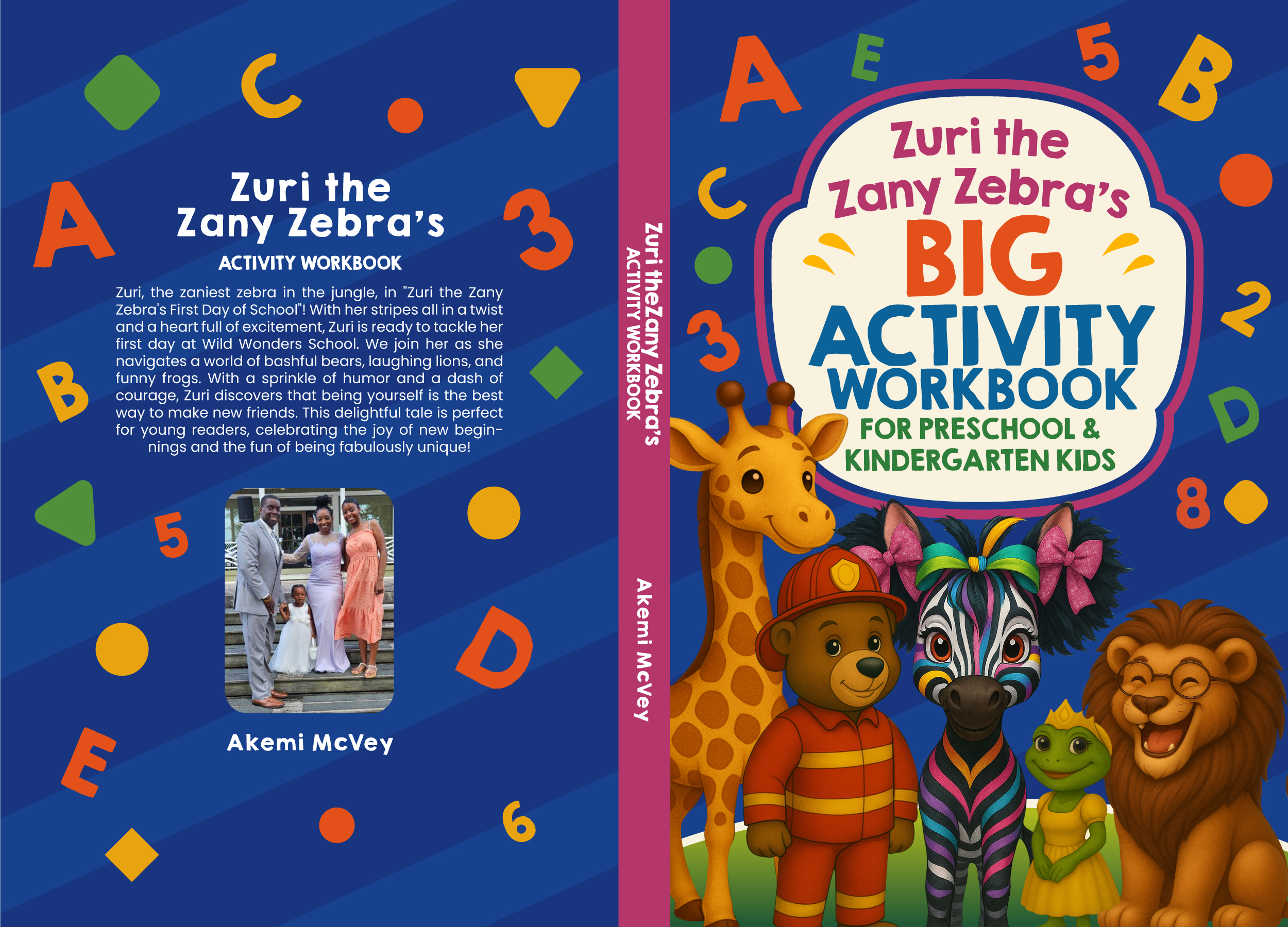
When it comes to early childhood learning, parents and educators are always looking for ways to make education fun, engaging, and meaningful. Young children are naturally curious and energetic, and the best way to capture their attention is through hands-on, colorful activities that make learning feel like play. That’s exactly why activity workbooks, like the Zuri the Zany Zebra BIG Activity Workbook, have become such powerful tools for preschoolers and kindergarteners.
Why Workbooks Matter
It’s easy to underestimate the impact of a workbook, but the truth is, they do far more than keep kids busy. Early activity books are carefully designed to develop critical skills while also encouraging creativity and independence. For preschoolers, this is essential. At this age, children are learning how to focus their attention, develop hand-eye coordination, and start to understand basic literacy and numeracy concepts. A workbook provides a structured, safe way to practice these skills repeatedly, in ways that feel like fun rather than formal lessons.
The Zuri Advantage
Take the example of the Zuri the Zany Zebra Activity Workbook. This isn’t just a collection of worksheets; it’s an adventure through a colorful jungle, full of friendly animals, mazes, coloring pages, secret codes, and puzzles. Kids can help Zuri navigate a jungle maze, decode secret messages, or invent their own jungle animals. Each activity is designed to support fine motor development, problem-solving, and early cognitive skills, while keeping the child fully engaged.
What makes Zuri’s workbook particularly effective is that it combines educational content with interactive play. Children aren’t just passively coloring or tracing, they are thinking critically, making choices, and seeing the results of their actions. This type of active learning helps solidify concepts, whether it’s counting, recognizing shapes, or understanding sequences.
Building Fine Motor Skills
One of the most important benefits of activity workbooks is that they help develop fine motor skills, the small muscle movements in the hands and fingers that are crucial for writing, drawing, and self-care. Tracing lines, connecting dots, and completing mazes in the workbook all contribute to this development. Children gain control over their movements, improving their ability to hold a pencil, color within the lines, and eventually write letters and numbers with ease.
Encouraging Creativity and Imagination
Activity workbooks also foster creativity and imaginative thinking. With Zuri’s workbook, children can draw their own jungle animals, create colorful scenes, and design secret messages. These activities encourage children to think outside the box, express themselves visually, and experiment with ideas, all of which are critical skills for early childhood development. Creativity is more than art; it’s a way for children to solve problems, adapt to new situations, and explore the world around them.
Supporting Emotional and Social Skills
Colorful workbooks can also play a role in social-emotional learning (SEL). Activities that involve matching feelings to situations, identifying emotions on characters like Zuri, or reflecting on a character’s actions help children develop empathy, self-awareness, and communication skills. For preschoolers, learning to recognize and talk about emotions in a safe, playful way is just as important as counting or coloring.
Building Confidence and Independence
There’s something magical that happens when a child completes a workbook activity. That feeling of accomplishment, whether it’s finishing a maze, solving a puzzle, or creating a colorful drawing, boosts confidence and independence. Workbooks like Zuri’s encourage children to try tasks on their own, make choices, and feel proud of their progress. This sense of achievement is foundational for developing a love of learning that lasts a lifetime.
Why Parents and Educators Love Workbooks
For parents, activity workbooks are a practical way to support learning at home. They provide a structured, screen-free activity that children can enjoy independently or with guidance. For educators, workbooks can complement classroom instruction, offering a mix of reinforcement and enrichment activities that support multiple learning styles.
In Conclusion
Colorful and interactive activity workbooks are more than just fun, they are powerful tools for early childhood development. They help children develop motor skills, cognitive abilities, creativity, and social-emotional awareness, all while making learning feel like play. The Zuri the Zany Zebra Activity Workbook is a perfect example of this approach, combining engaging storytelling with hands-on learning activities that children love.
If you want your preschooler or kindergartener to enjoy learning through play, to explore, create, and build confidence while developing essential skills, an activity workbook like Zuri’s is a perfect choice. With Zuri by their side, every page becomes an adventure, every activity a learning opportunity, and every accomplishment a reason to celebrate.